Scroll Fatigue Is Real: We're Watching More Than Ever and Enjoying It Less
Opinion — Loupan Videos Editorial
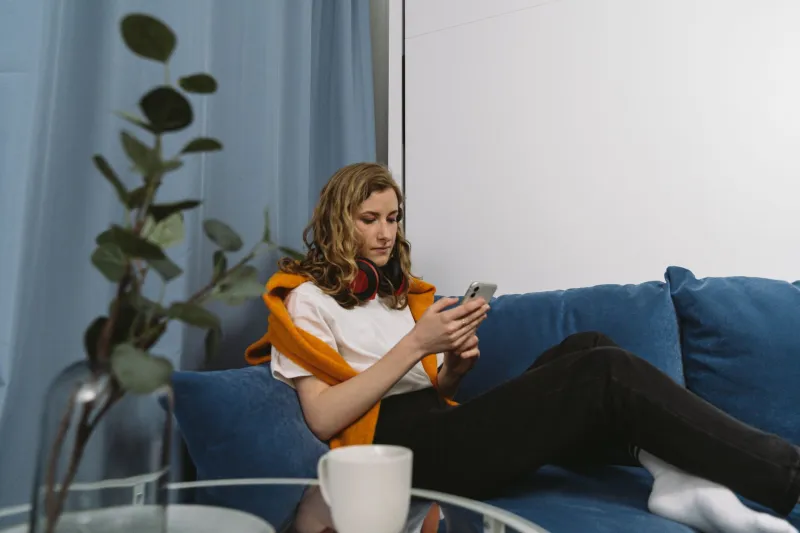
Sometime around 11 PM on a Wednesday, you find yourself watching a video about a topic you have no particular interest in, made by someone you've never heard of, that the algorithm decided you needed to see. You finish it. You watch another. You're not really enjoying yourself. You're not learning anything. You're not even sure why you're still here.
This is the entertainment paradox of the digital age, and it's worth being honest about.
Americans are watching more video content than at any point in recorded history. The average adult in the US spends somewhere north of six hours a day in front of screens, with video making up a huge chunk of that. By any measurable standard, we are consuming entertainment at a staggering rate. And yet — ask people how satisfied they feel with their media diet, and the answers are surprisingly bleak. Anxious. Overstimulated. Vaguely guilty. Like they ate an entire bag of chips and somehow still feel hungry.
Something is off. Let's talk about what.
The Algorithm Isn't Your Friend (Even When It Feels Like It)
Here's the thing about recommendation algorithms: they are not optimized for your happiness. They are optimized for your engagement — which sounds like the same thing but absolutely is not.
Engagement means time on platform. It means clicks, replays, shares, and comments. And the content that drives the most raw engagement is often not the content that leaves you feeling good. Outrage drives engagement. Anxiety drives engagement. The bizarre, the shocking, and the oddly compelling all drive engagement. Contentment, satisfaction, and genuine fulfillment? Those are harder to measure and, frankly, not what the algorithm is chasing.
This creates a feedback loop that most of us have felt without being able to name it. You tell the platform you like cooking videos, so it shows you cooking videos. Then it starts showing you cooking videos with conflict — dramatic restaurant failures, competitive cooking shows, cooking disasters. Then it's showing you arguments about cooking. Then it's showing you content that has almost nothing to do with cooking but made you click once at 1 AM. The algorithm learned what gets your attention, and it's not the same as what makes you happy.
Content Oversaturation and the Paradox of Choice
In 2024, the volume of video content being produced globally is essentially incomprehensible. Millions of hours of new content are uploaded every single day. The idea that you could ever "catch up" or find "the best" of anything is a fiction — there's simply too much.
Psychologists have written at length about what Barry Schwartz famously called the "paradox of choice" — the counterintuitive finding that more options often lead to less satisfaction, not more. When you could be watching anything, the thing you're actually watching carries a constant background hum of doubt. Is this the best use of my time? Is there something better I'm missing? That low-grade anxiety is the tax we pay for unlimited content libraries.
And the platforms know it. The autoplay feature, the infinite scroll, the "up next" queue — these are all design choices specifically engineered to prevent the moment of decision where you might choose to stop. If you never reach a natural stopping point, you never have to choose to continue. You just... keep watching.
The Difference Between Watching and Experiencing
There's a distinction worth drawing here that often gets lost: there's a difference between watching content and genuinely experiencing it.
Think about the last time a video — a film, a documentary, a short series, a creator's video essay — actually moved you. Made you think differently about something. Made you laugh so hard you had to pause it. Left you with something to chew on for days afterward. That's an experience. It has weight. You remember it.
Now think about the last two hours of ambient scrolling. Can you reconstruct what you watched? Probably not in any detail. That content passed through you without leaving much of a mark. It occupied your time without enriching it — and at some level, your brain knows the difference, even if your thumb kept scrolling anyway.
The volume of viewing doesn't produce proportional satisfaction because most of that viewing isn't really watching in any meaningful sense. It's more like having the TV on in another room. Presence without attention.
Reclaiming Intentional Viewing
This isn't a call to delete your apps and move to a cabin. That's not realistic and honestly not necessary. But there's a compelling case for being a little more deliberate about how you engage with video content.
A few things that actually seem to help:
Watch with a purpose. Before you open an app, have a loose sense of what you're in the mood for — something funny, something educational, something genuinely relaxing. Starting with intent makes you a more active viewer and less susceptible to the algorithm's detours.
Choose completion over quantity. Watching one 45-minute documentary all the way through is almost always more satisfying than watching the first 8 minutes of six different things. Finishing something feels good. Half-watching a dozen things feels like nothing.
Use search more than you use the feed. Looking up a specific creator, topic, or video you've heard about puts you in control of the experience rather than handing the wheel to an algorithm. It's a small shift with a real impact.
Give yourself an actual stopping point. Not "I'll stop when I get tired" — that's not a stopping point, that's a surrender. Pick a time, finish what you're watching, and close the app. Your brain will thank you.
What Great Entertainment Actually Does
At Loupan Videos, we think about this a lot. The content that genuinely resonates — the tutorials that stick, the series people come back to, the videos that get shared because someone actually wants a friend to see them — has a quality that's distinct from content that's merely engaging.
It respects the viewer's time. It has a point of view. It either teaches you something, moves you emotionally, or makes the world feel slightly more interesting than it did before you pressed play. That's the bar worth holding content to — including your own viewing habits.
Watching more isn't the goal. Watching better is.
The screen isn't going anywhere. But your attention is the most finite resource you have. Spend it like it matters — because it does.